
Automotive Pressure Switches
Rugged on/off pressure switches that trip a contact at a precise setpoint — for warning lamps, compressor cut-out and system protection. SPST / SPDT, isolated or non-isolated, ±3 psi setpoint tolerance, -40°C to +150°C, IP67. No ECU required.
Common Uses:
- Low Oil Pressure Warning
- HVAC Compressor Cut-Out
- Hydraulic System Protection
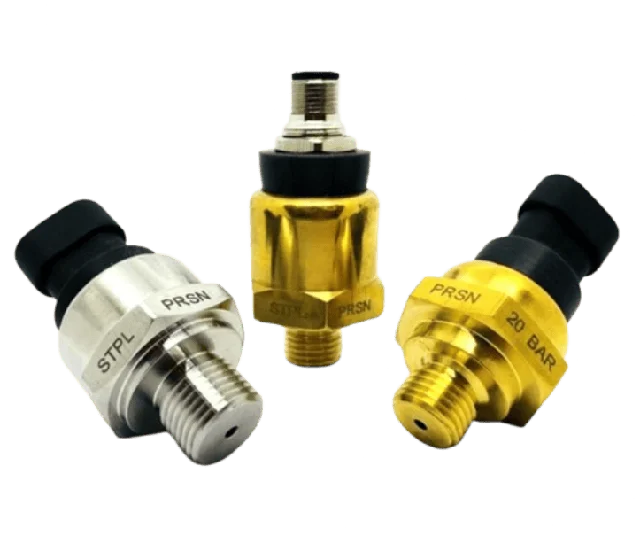
Switch Specs:
Need a continuous pressure reading instead? See pressure sensors →
How a pressure switch works
A diaphragm or piston acts against a calibrated spring. When pressure crosses the setpoint the mechanism snaps an electrical contact open or closed — driving a lamp, relay or protection circuit directly.
Setpoint
The pressure at which the contact changes state, calibrated to ±3 psi.
Deadband / hysteresis
The gap between trip and reset points that prevents contact chatter.
SPST vs SPDT
Single make/break, or common + NO + NC for dual-circuit switching.
Isolated / non-isolated
Contacts floating from the body, or body-referenced to ground.
Where threshold switching matters
Switches are specified when the system only needs to know it has crossed a limit — for alarms, cut-offs and protection.
Low Oil Pressure Warning
Trips the dashboard warning lamp the instant oil pressure drops below the safe setpoint — the classic engine-protection switch, no ECU required.
HVAC Compressor Cut-Out
High- and low-pressure switches protect the A/C compressor by cutting the clutch circuit outside the safe refrigerant pressure window.
Hydraulic System Protection
Setpoint switches signal over- or under-pressure in steering, brake and auxiliary hydraulic circuits to trigger relief or shutdown.
Pump & Fan Control
Pressure-actuated switching to cut in/out pumps and cooling fans, holding system pressure between two thresholds via deadband.
Brake Pressure Warning
Detects loss of brake-line pressure and energises a warning circuit in safety-critical braking systems.
Air System Limit Switching
Pneumatic and air-brake reservoirs use threshold switches to signal compressor cut-in and low-pressure alarms.
Switch specification selector
Pick the switch type, setpoint and mechanical options. The specification summary assembles below — submit it as an RFQ and our engineering team will quote against your circuit.
Switch type: SPST
Contact configuration: Non-isolated
Setpoint: 5.0 bar
Pressure port: M10 × 1 Straight
Housing material: Brass
Mating connector: Terminal Technologies · TTP-SS3FN (IP67)
Technical Specifications
Setpoint and deadband calibrated per customer drawing. Contact us for an OEM quotation.
Pressure Switch Series
Pressure Switch FAQ
Frequently Asked Questions
Engineering answers to the questions our customers ask most often.
A pressure switch opens or closes an electrical contact when pressure crosses a preset setpoint. Unlike a sensor it gives no continuous reading — it is a rugged on/off output used to trigger a warning lamp, relay or protection circuit, often without any ECU.
Need a switch set to your pressure?
We calibrate setpoint and deadband to your circuit, with SPST/SPDT and isolated options across automotive media.
Or visit our contact page for general inquiries.
Related Applications
Oil Pressure Sensor: Complete Diagnostic Guide
Symptoms, diagnosis, maintenance and replacement of oil pressure switches and sensors.
HVAC Temperature & Pressure Sensors
How threshold switches protect mobile HVAC compressors across the refrigerant window.
Hydraulic & Pneumatic Sensors
Pressure switches and sensors for mobile hydraulic and pneumatic protection circuits.
Brake Pressure Sensors for ABS Systems
Pressure feedback and warning switching in safety-critical brake systems.
Related Products
Pressure Sensors
Continuous ceramic & MEMS pressure sensors with 0.5–4.5 V / 4–20 mA output for closed-loop measurement.
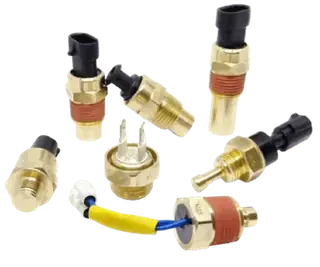
Temperature Switches
±3°C snap-action SPST/SPDT thermostat switches for radiator fan, over-temp warning and HVAC cut-out.
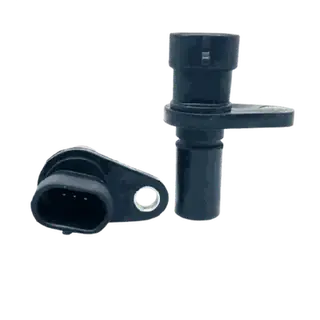
Position Sensors
Hall-effect cam, crank and wheel-speed sensors for engine management and ABS.
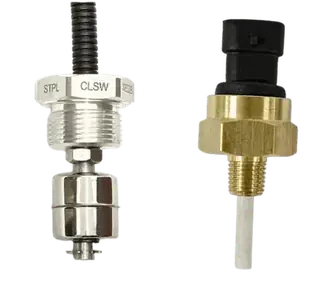
Coolant Level Sensors
Capacitive non-contact coolant level monitoring with ±2 mm accuracy.